System Separation In The Continental Europe Synchronous Area
- country Continental Europe
- region Bucharest
- categories System Separation
- impacts No content
- start 08 January 2021 at 12:01:00 Europe/Bucharest
- end 08 January 2021 at 12:01:00 Europe/Bucharest
- duration 1 minute
- primary cause Busbar overcurrent protection tripping
- secondary causes No content
- load lost No content
- number of customers affected No content
- end of disturbance criteria No content
why this is interesting
total event duration is 42 secs from first tripping to system split
description
The analysed sequence of events concludes that the initial event was the tripping of a 400 kV busbar coupler in the substation Ernestinovo (Croatia) by overcurrent protection at 14:04:25.9. This resulted in a decoupling of the two busbars in the Ernestinovo substation, which in turn separated North-West and south-east electric power flows in this substation. As shown in Figure 1 below, North-West bound lines which remained connected to one busbar, connect Ernestinovo to Zerjavinec (Croatia) and Pecs (Hungary), while South-East bound lines which remained connected to another busbar, connect Ernestinovo to Ugljevik (Bosnia-Herzegovina) and Sremska Mitrovica (Serbia).
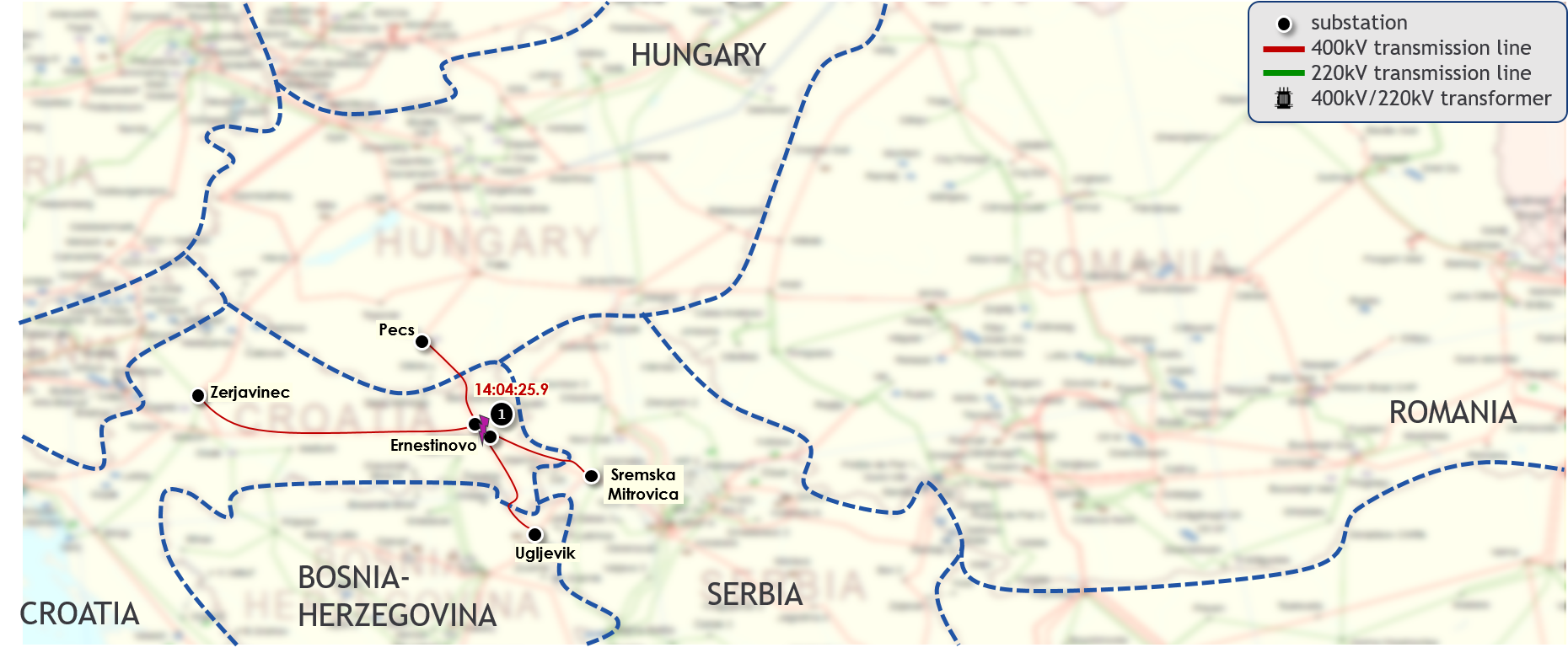
Figure 1 - Decoupling of two busbars in Ernestinovo
The separation of flows in the Ernestinovo substation, lead to the shifting of electric power flows to neighbouring lines which were subsequently overloaded. At 14:04:48.9, the line Subotica – Novi Sad (Serbia) tripped due to overcurrent protection. This was followed by the further tripping of lines due to distance protection, as shown in Figure 2, below, leading eventually to the system separation into two parts at 14:05:08.6.
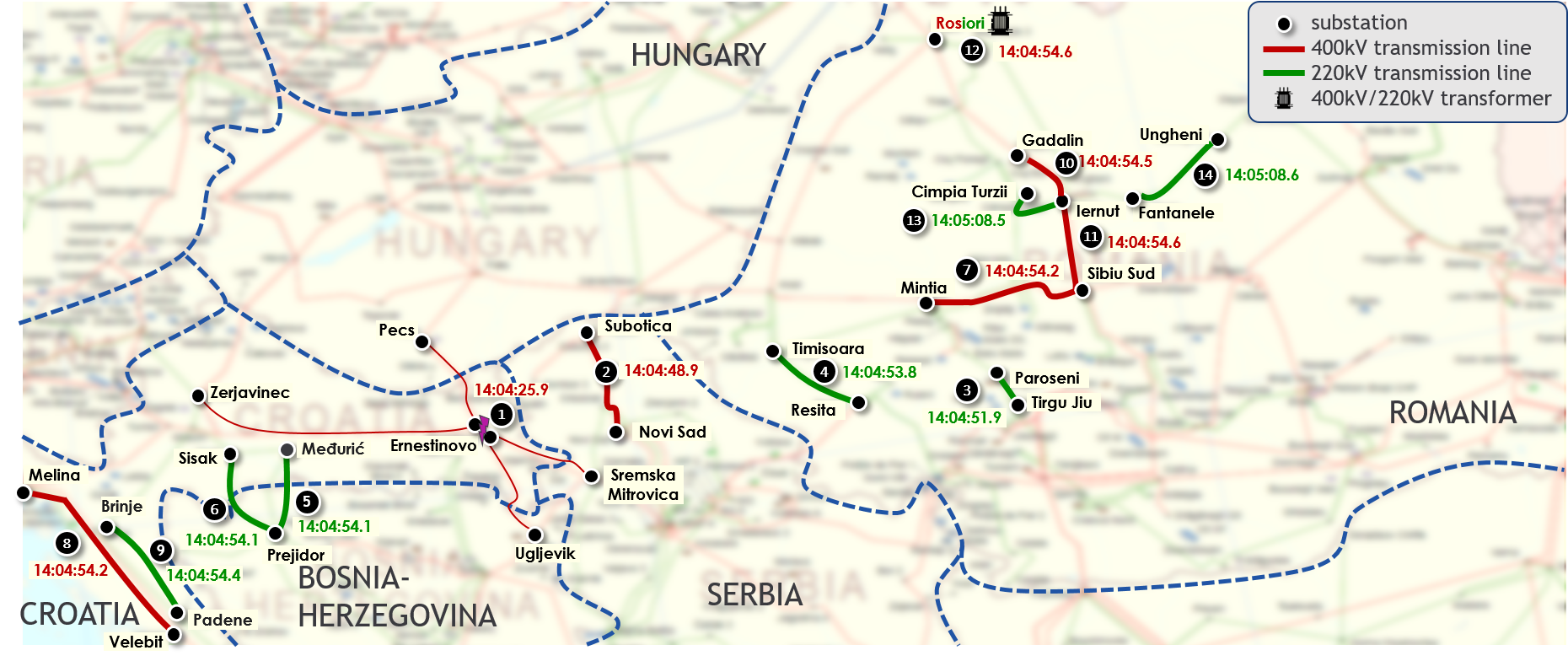
Figure 2 - Tripping of additional transmission network elements after the decoupling of two busbars in Ernestinovo
The route where the two parts of the Continental Europe Synchronous Area were separated is shown in Figure 3 below:
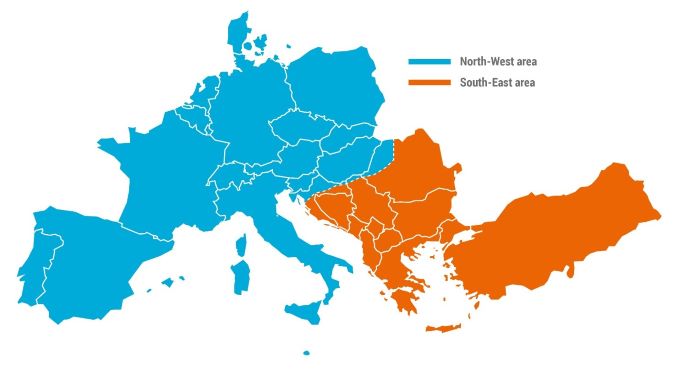
Figure 3 – Separation of Continental Europe Synchronous Area on 8 January 2021
The system separation resulted in a deficit of power (approx. -6.3 GW) in the North-West Area and a surplus of power (approx. +6.3 GW) in the South-East Area, resulting in turn in a frequency decrease in the North-West Area and a frequency increase in the South-East Area.
At approximately 14:05 CET, the frequency in the North-West Area initially decreased to a value of 49.74 Hz within a period of around 15 seconds before quickly reaching a steady state value of approximately 49.84 Hz. At the same time, the frequency in the South-East Area initially increased up to 50.6 Hz before settling at a steady state frequency between 50.2 Hz and 50.3 Hz as illustrated in Figure 4 below:

Figure 4 - Frequency in Continental Europe during the event on 8 January 2021 right after the disturbance and during resynchronisation
Due to the low frequency in the North-West Area, contracted interruptible services in France and Italy (in total around 1.7 GW) were disconnected in order to reduce the frequency deviation. These services are provided by large customers who are contracted by the respective Transmission System Operators (TSOs) to be disconnected if frequency drops under a certain threshold. In addition, 420 MW and 60 MW of supportive power were automatically activated from the Nordic and Great Britain synchronous areas respectively. These countermeasures ensured that already at 14:09 CET the frequency deviation from the nominal value of 50 Hz was reduced to around 0.1 Hz in the North-West area (Figure 4).
In order to reduce the high frequency in the South-East Area, automatic and manual countermeasures were activated, including the reduction of generation output (Eg. automatic disconnection of a 975 MW generator in Turkey at 14:04:57). As a consequence, the frequency in the South-East Area returned to 50.2 Hz at 14:29 CET and remained within control limits (49.8 and 50.2 Hz) until the resynchronisation of the two separated areas took place at 15:07:31.6 CET.
Between 14:30 CET and 15:06 CET the frequency in the South-East area was fluctuating between 49.9 Hz and 50.2 Hz due to the rather small size of the South-East Area where also several production units were disconnected (Figure 5). During this period, the frequency in the North-West Area fluctuated far less and remained close to the nominal value, due to the rather large size of the North-West Area. This frequency behaviour is a subject of further detailed investigation.
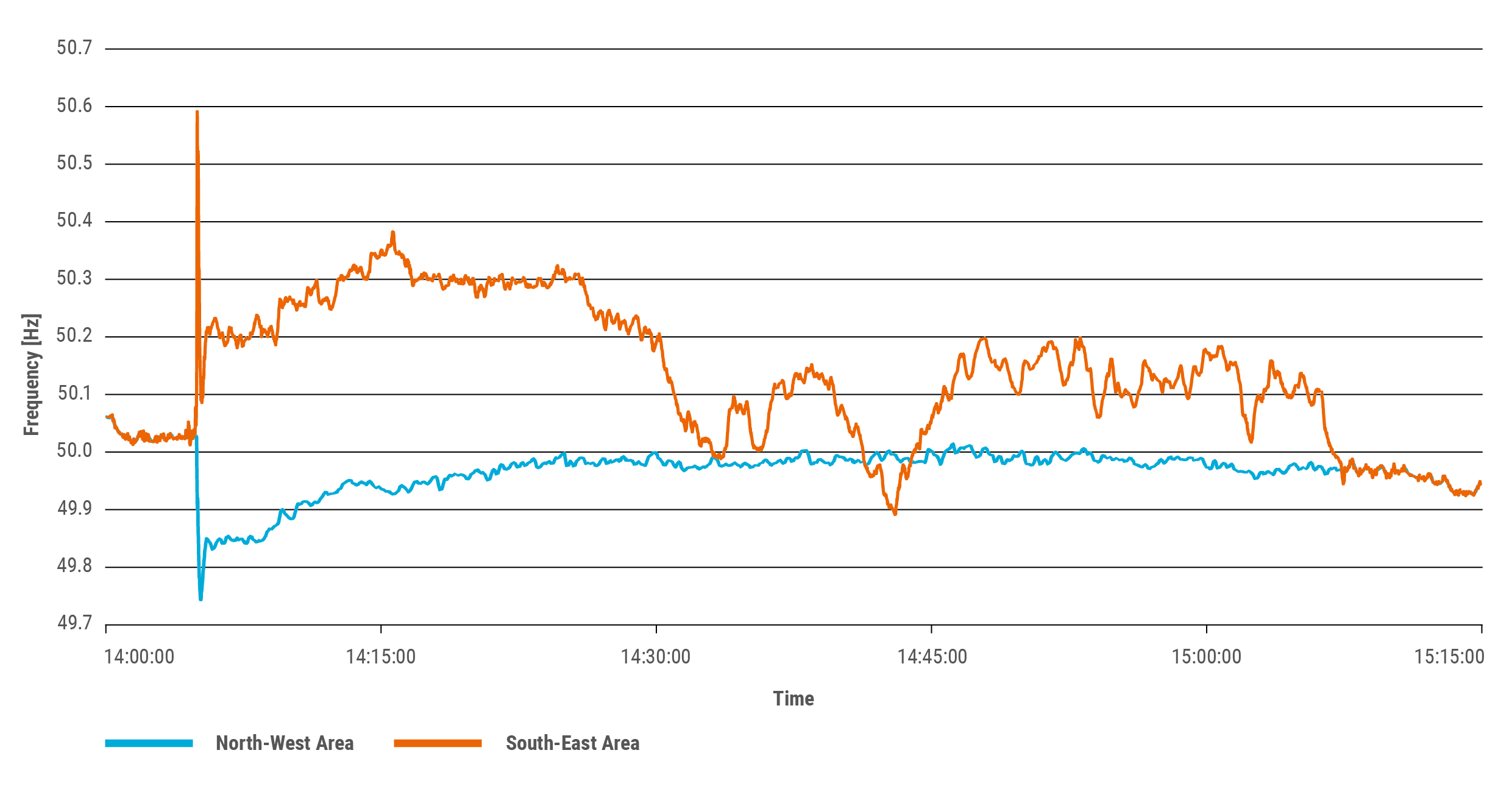
Figure 5 - Frequency in Continental Europe during the event on 8 January 2021 for the complete duration
The automatic response and the coordinated actions taken by the TSOs in Continental Europe ensured that the situation was quickly restored close to normal operation. The contracted interruptible services in Italy and in France were reconnected at 14:47 CET and 14:48 CET respectively prior to the resynchronisation of the North-West and South-East areas at 15:08 CET.
A final report has been added